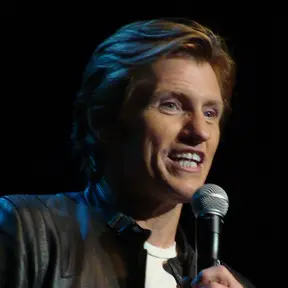
Denis Leary
A chain-smoking Boston loudmouth who built an empire on borrowed attitude.
2 specials · 1993–1997
Get an email when there's a new special. You'll need a Google account.
Denis Leary paces the stage like a man trying to win an argument in a parking lot. He rarely stops moving, delivering rapid-fire lists of things that annoy him while aggressively dragging on a cigarette. His rhythm relies on overwhelming the room with volume and speed, escalating minor grievances about vegetarians or decaf coffee into actual shouting matches. He skips standard setup-and-punchline structures entirely in favor of angry, high-speed rants.
Specials
-
A high-volume defense of smoking, meat-eating, and being a jerk.
Showtime · 62 min
On stage
He represents a specific era of 1990s MTV cynicism. He converted the sneering, leather-jacket attitude of the comedy club into mainstream success, eventually leaving the stage behind to play variations of that same tough-guy persona in television and film.
His comedy hours operated like rock concerts, frequently using backing bands and closing with musical numbers. He knew how to execute an extended complaint, effectively channeling the frustration of an irritated guy who just wants to eat red meat and be left alone. But his standup legacy is permanently complicated by his habit of lifting material. He took the anti-establishment anger of Bill Hicks and stripped away the intellectual curiosity, repackaging the raw attitude for a broader audience. He also expanded a smaller bit by Louis C.K. into his signature hit song. Leary was a loud, commanding performer who could sell a joke with pure confidence, even when he didn’t write it.
His Irish Catholic upbringing in Massachusetts supplied the entire foundation for his stage persona. That fast-talking Boston aggression became his permanent default setting, carrying him straight out of the comedy clubs and into decades of network dramas.