Drew Michael
He actively fights against the basic rhythms of standup.
3 specials · 2016–2021
Start with Drew Michael, the breakout (2018 · 49 min · HBO)
Get an email when there's a new special. You'll need a Google account.
When Drew Michael is on stage, he acts as if he resents the very concept of telling a joke. He speaks in a quiet, measured cadence, pacing slowly and holding intense eye contact with the crowd. He will build a premise about something bleak—a bad breakup, deep depression, or the moral failings of society—and just let the silence hang in the room. When the audience starts shifting in their seats waiting for the tension to break, he leans into the awkwardness rather than giving them a release valve.
Specials
-
A methodical breakdown of depression, arguments, and bad decisions.
Comedy Central · 30 min
On stage
He occupies a strange, polarizing space in the comedy ecosystem. He famously shot an entire hour for HBO on a black soundstage with no audience. Even when he returned to crowds for later tapings, he spent much of the runtime questioning why anyone was there at all. Standup purists watch him to see someone actively deconstruct the form, while casual viewers often leave his shows wondering if they just paid to be scolded.
He gets his biggest laughs just by making the room uncomfortable.
The material itself is stubbornly interior. He talks about his romantic failures and mental health in a flat tone. At his best, this creates a fascinating friction. At his weakest, his refusal to write punchlines makes the act feel like a long, hostile lecture.
His severe childhood hearing loss is the engine for his entire persona. That early isolation created a comic who fundamentally views social interactions from the outside. He spent time writing for Saturday Night Live, a rigid job that stands in stark contrast to his sprawling, unhurried stage act.
Turning points
-
Filming Stand-Up Special Without an Audience
Drew Michael teamed with director Jerrod Carmichael to film his self-titled HBO special on a dark stage with no live audience, creating one of the most polarizing and experimental comedy specials of the year.
-
Edinburgh Fringe Debut with Drew's Adventures
Michael made his UK debut at the Edinburgh Fringe with a show centering on his progressive hearing loss and utilizing a vocal processor and looping station.
At a glance
- Style
- experimental, confessional, dark comedy, satire
- Breakout
- Drew Michael
- Influences
- Louis C.K., Andy Kaufman, Bill Hicks
- Topics
- Elsewhere
- Website, Wikipedia, Instagram, YouTube
Fans also like
-
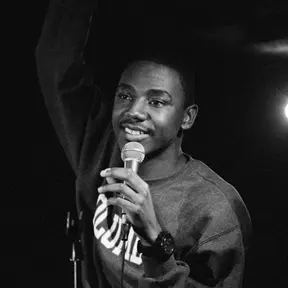 Jerrod Carmichael
Jerrod Carmichael directed Michael's revolutionary 2018 HBO special, sharing an unconventional, intimate, and cinematic sensibility that pushes beyond the boundaries of standard stand-up.
-
Marc Maron
Maron identified a strong kinship with Michael's confessional, iconoclastic pursuit of dissecting life's problems and neuroses on stage.
Podcasts
-
I Might Be Wrong · host
Weekly comedy podcast hosted by Drew Michael exploring thoughts, comedy, and personal musings.
Also on screen
- –
- The Carmichael Show
A clip to start with

Cheating on Someone Isn’t Just One Mistake - Drew Michael