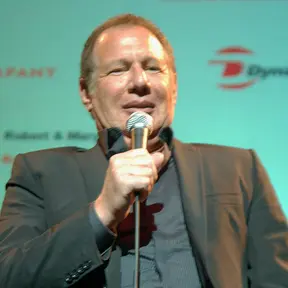
Garry Shandling
He made deep, fidgety discomfort the engine of modern standup.
1 special · 1991
Get an email when there's a new special. You'll need a Google account.
Watch Garry Shandling on stage and you see a man who looks actively inconvenienced by the act of performing. He fidgets. He adjusts the microphone stand, touches his hair, and squints at the room like the crowd just asked him a personal question. His timing relies on the mid-sentence stall. He will start a premise, pause long enough to let the silence get uncomfortable, and then mutter the punchline as if he regrets saying it aloud. He uses hesitation the way other comics use volume.
Specials
On stage
He occupies a rare space among comedians: the guy who walked away from the late-night throne. Instead of taking over a standard talk show desk, he built television shows that dismantled the sitcom and the talk show formats. By making the artificial rules of television the actual subject of his comedy, he ensured an entire generation of comics studies his tape.
His standup runs on constant self-sabotage. While his peers in the 1980s projected unearned confidence, he built his act out of his inability to maintain a relationship. He writes clean material that feels emotionally messy. A standard Shandling bit works by quietly undercutting his own dignity right at the punchline. He will explain that he finally dumped his girlfriend because she moved in with another guy, “sort of.”
Before he ever picked up a microphone, he worked as a traditional television writer, typing out scripts for Sanford and Son and Welcome Back, Kotter. That foundational understanding of how a standard joke functions is exactly what allowed him to spend the rest of his career pulling the form apart.
At a glance
- Topics