
Stark Raving Black
Comedy Central · 2009 · 80 min
A 60-year-old comic yells about mortality, the economy, and Vince Gill.
George W. Bush has finally left office, leaving a famously angry comic to figure out what to yell about next. Instead of relying entirely on political grievances, the 60-year-old turns his attention to mortality, aging, and the troubling realization that he is now a mainstream act. The standout routine is an agonizing story about performing at a charity benefit. He explains exactly what it feels like to deliver profane, godless material to a crowd that just finished weeping to country music stars Vince Gill and Amy Grant.
Filmed in August 2009 at the Fillmore Theatre in Detroit, Stark Raving Black catches the performer grappling with the subprime mortgage crisis, the push for alternative energy, and a new Democratic administration. He chose Detroit because he figured the city had a right to be as furious as he was. While he still targets both sides of the aisle, the tone shifts inward as he details his parents’ marriage, his father’s peculiar smile, and his own impending demise.
The audio release won a 2011 Grammy for Best Comedy Album. It stands as one of his darker performances, focusing heavily on death and existential frustration. He closes the show by predicting that the world will become a perfect utopia exactly one day after he dies.
The set list
-
Performing directly after Vince Gill and Amy Grant at a benefit concert
Riffs on the stark dichotomy of following a wholesome Christian musical duo—describing Amy Grant as 'made entirely of cream'—as a miserable aging Jewish comic.
-
Turning 60 years old and facing mortality
Examines aging as the 'end of the line,' weaving in a childhood birthday-wish callback to illustrate the absurdities and pathos of growing older.
-
The Wall Street economic collapse and mortgages
Channels furious outrage toward predatory financial institutions and the absurdity of 100-page mortgage documents devoid of jokes.
-
Failure to develop alternative energy in the modern era
Contrasts handheld smartphone technology ('Star Trek time') against humanity's ongoing inability or refusal to solve renewable energy needs.
-
The closer (spoiler). Show it
Hope and closing reflections
Addresses the national obsession with 'hope' following political shifts, balancing serious contemplation with sharp comedic punctuation.
How it plays
- Tone
- Indignant, profane, darkly existential, and outrageously satirical.
- On stage
- Grumpy, fiercely agitated, and eloquently splenetic observer of human idiocy, known for violent outbursts of profanity, arm-waving, and an animated jabbing index finger.
- Pace
- Opens at a deliberate, conversational tempo before shifting into high gear with explosive, unhinged fury, contrasting soft tones of barely contained impatience with roaring crescendos.
- About
- The 2008 economic collapse and American corporate greed, Post-Bush American politics and the two-party system, Aging, turning 60, and mortality, Alternative energy and technology, Long-term marriage and parents
What the critics said
Praised for Black's brilliant, searing social commentary and genuine righteous indignation regarding the economic crisis, though reviewers noted the personal narrative bits in the first half started at a slower pace.
In the room: Energetic, responsive sold-out crowd at the historic Fillmore Detroit.
Backstory
Filmed in the wake of the 2008 global financial crisis and the conclusion of the George W. Bush presidency, amidst public debates over economic bailout greed and alternative energy.
Details
- Released
- Taped
- The Fillmore Detroit
- Runtime
- 80 min
- Where
- Comedy Central
- Director
- Adam Dubin
- Honors
- Grammy Award for Best Comedy Album (won in 2011 for the album release)The New York Times Critic's Pick
- Topics
- Before
- Red, White & Screwed (2006)
- After
- In God We Rust (2012)
More from Lewis Black
-
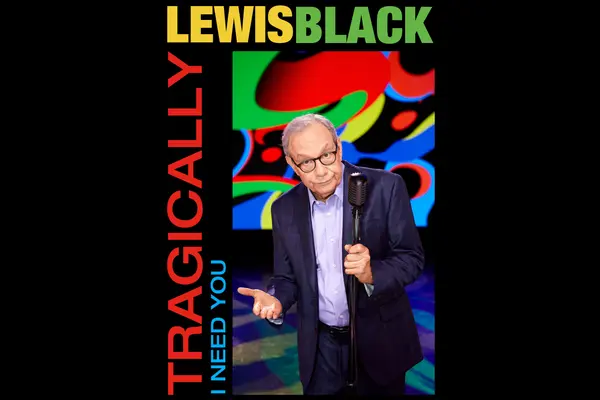
Tragically, I Need You
YouTube
-
Thanks for Risking Your Life
Prime Video
-
Black to the Future
Prime Video
-
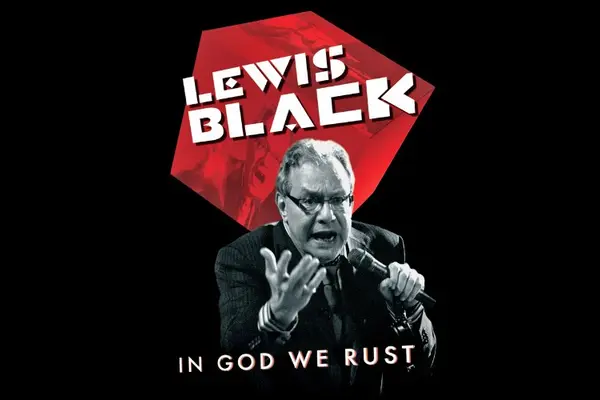
In God We Rust
Epix
-
Red, White & Screwed
HBO Max

If you liked this
-
Ronny Chieng Love To Hate It
Netflix
-
Tim Dillon A Real Hero
Netflix
-
Bill Burr Walk Your Way Out
Netflix