Marcus Brigstocke
Stand-up specials
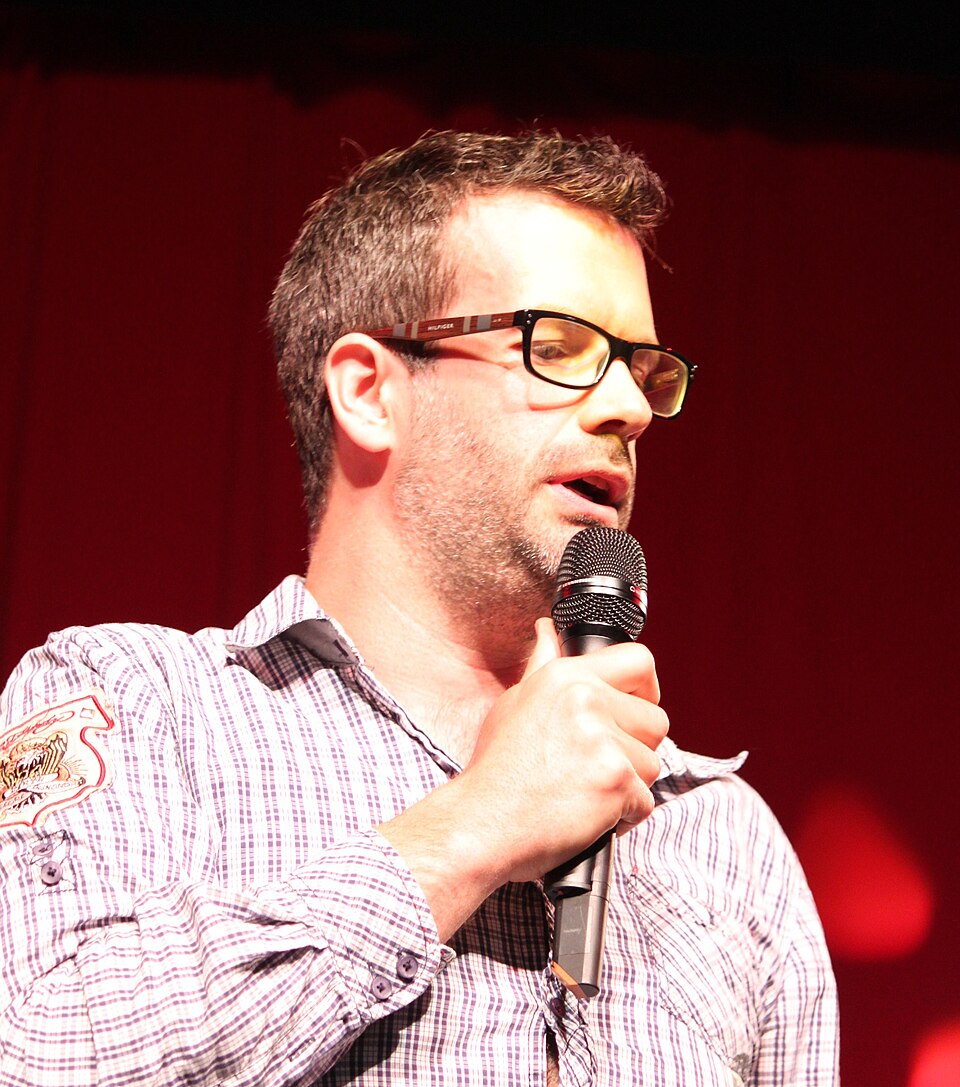
Photo: Rodw / CC-BY-SA-4.0
Radio 4 liberalism served with weary frustration and impeccable posture.
Marcus Brigstocke paces the stage in a cardigan and tie, radiating the exhausted patience of a substitute teacher whose lesson plan has gone off the rails. He speaks in crisp, polished vowels. When a bit leans into uncomfortable territory, he acknowledges the tension by maintaining polite, unblinking eye contact with the front row until the awkwardness breaks into a laugh. He will drop into hyper-specific regional accents, deliberately pushing against polite sensibilities just to watch the theatergoers in the room squirm in their seats.
He is a permanent fixture of British broadcasting, the kind of comic who feels built into the walls of the BBC. He plays arts centers to crowds who already vote the way he does, making the live show less about political persuasion and more about a shared venting session.
A typical set wraps political frustration around deeply domestic embarrassments. He will spend ten minutes picking apart a cabinet minister’s logic, then pivot to a story about ruining a bourgeois family holiday or overeating on a safari. He uses his own poshness as a trap, setting himself up as the fall guy for the comfortable habits he mocks.
The aggressive anger of his older material has softened into a tired shrug. He talks about second-time fatherhood, knee surgeries, and male loneliness with the same sharp diction he once reserved exclusively for parliament. He occasionally hides behind high-concept theatrical framing, like performing an entire hour in full red makeup and horns as Lucifer just to mock supermarket habits. Even then, the act always comes back to an articulate, tired man trying to explain why the world refuses to make sense.