The weekly letter , , 4 min read
Walkouts, Paywalls, and Ticket Receipts
Kate Berlant stares down her departing crowd, Jerry Seinfeld audits a protester's ticket receipt, and a Patreon roast goes public.
Refusing to Leave the Stage First
HBO has released Parmesan, a new standup special in which Kate Berlant, a Los Angeles-born absurdist and physical comedian, drops her usual fictional characters to do an hour as herself. Most comedians spend their lives trying to keep people in their seats, and then leave the stage the second the hour is up so they do not have to watch the room empty out. At the end of a special, the contract is simple: the comedian delivers one big closing punchline, waves, and walks off.
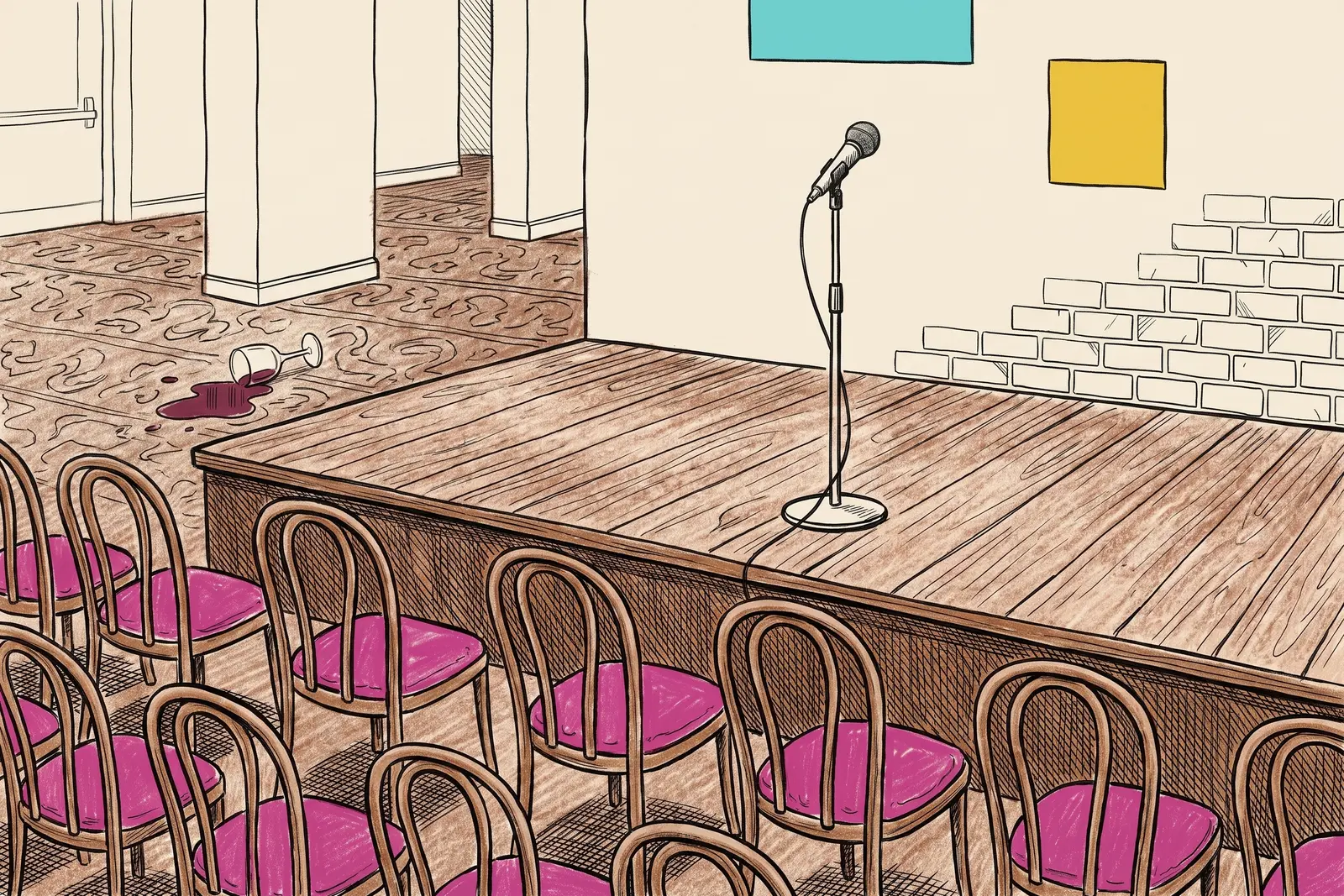
When director Doron Hagay gave Berlant the note that she needed a traditional big closer, she decided to do the opposite. She finishes the show, refuses to deliver a final punchline, and tells the crowd she is going to watch them for once, remaining on the stage of Los Angeles’ Plaza Nightclub while the entire audience files out of the room.
It is a fitting ending for an hour that already tests what makes an audience walk out. Earlier in the tour, a man in the center of the room stood up with his partner, flipped Berlant off, and threw a glass of wine in the lobby. The line that pushed him over the edge was a mild observation about family dynamics: “A father is a family friend.”
By staying on stage while the audience files out, Berlant turns the awkward shuffle toward the exits into her final bit. If a guy is going to throw a glass of wine in the lobby over a joke about dads, she might as well stay on stage and supervise the rest of the evacuation.
Auditing the Protester in the Orchestra Seats
Jerry Seinfeld was in the middle of a routine about his cellphone service at the Chicago Theatre when pro-Palestinian demonstrators stood up to interrupt the show. If you buy a ticket to disrupt a 72-year-old billionaire comedian in 2026, you are entering a very specific financial transaction: you give him your money, and in exchange, you get about forty seconds of yelling before the ushers arrive.
When a female protester shouted that 22,000 Palestinian children had been killed with taxpayer money while he made jokes, Seinfeld did not wait quietly for security or attempt a speech about free expression. Instead, he danced on stage while his sitcom’s theme music played and sarcastically agreed with every accusation: “I’m racist, it’s a genocide, I’m into it.”
As security guards escorted the demonstrators up the aisle, Seinfeld added an accounting note: “But I’m going to find out how much your ticket was and I’m sending it to Israel.” Political protesters usually assume their leverage is moral embarrassment, which only works if the guy with the microphone cares about looking bad on your phone camera. Once a comedian decides to treat a protest as a charitable contribution to the exact thing you are protesting, the economics of buying a theater seat to yell at him fall apart.
The Problem With Clipping the Paywalled Roast
When comedians book a live roast for a podcast’s Patreon subscribers, the unspoken premise is that the paywall acts as a blast shield. Everyone on stage tells the worst joke they can think of, the 45,000 paying fans of the Have A Word podcast laugh because they paid for transgressive filth, and nobody outside the club ever hears about it. That arrangement only works until someone decides the joke is good enough for Instagram.
During the live roast, Vittorio Angelone—a Belfast-born standup who has built a progressive, leftist persona—turned to fellow comic and Have A Word regular Freddy Quinne, who was being roasted, and used OnlyFans creator Rebecca Goodwin’s active rape trial as a setup: “Freddy, if you’re here, who’s raping Rebecca Goodwin?” While the comics on stage, whom Goodwin had considered genuine friends, laughed, Angelone added a second punchline: “That’s a joke. Of course it’s her dad.”
The production team clipped the exchange for social media, and Angelone posted a captioned image of the gag to his own Instagram feed before later deleting it. Rachel Morrogh, chief executive of the Dublin Rape Crisis Centre, publicly condemned the bit, and Goodwin publicly rejected the belated apologies from the comics who laughed on stage. A roast comic can always argue that the room understood the context of an ugly joke. Once you turn a joke about an active trial into a promotional graphic for your main feed, though, you are no longer hiding behind the rules of the room. You are just doing marketing.