Norman Rockwell Is Bleeding
Comedy Central · 2004 · 1 h 30 min
A dark, theatrical monologue about surviving a heavily dysfunctional childhood.
Most comedians talk about their families with a sense of warm exasperation, but Christopher Titus treats his childhood like a crime scene where he was both the victim and a co-conspirator. Standing on a stage decorated with a single wooden chair and a dilapidated backdrop, he paces with an intense, nervous energy as he details real-life horrors. He talks about his mother, a paranoid schizophrenic who shot her husband, and his father, a hard-drinking military veteran who survived multiple heart attacks only to have his organ donor card revoked and replaced with a hazardous waste decal.\n\nFilmed at the Hudson Theater in Los Angeles and broadcast as a Showtime special in 2004, the show served as the spiritual backbone of his career. By the time it aired, the sitcom it inspired, Titus, had already run for three seasons on Fox and been canceled after he clashed with network executives. Returning to the stage allowed him to deliver the material without the sanitizing filter of network television, adding updates about the cancellation itself.\n\nThe performance operates on a style he refers to as hard funny. Rather than seeking pity for a childhood of custody battles and physical abuse, he frames the trauma as a badge of honor. He quotes a Los Angeles Times statistic claiming 63 percent of American families are dysfunctional, concluding that this makes his broken household the new normal, while traditional nuclear families are the true freaks.\n\nOther notable segments recount a disastrous high-school bonfire incident where he fell into the embers and burned his hands, and a live local news broadcast that accidentally caught his father getting stopped at a drunk-driving checkpoint. Instead of showing concern, Titus and his brother taped the broadcast to play at every family reunion.\n\nThe performance functions as a theatrical, dark monologue rather than a series of disconnected setups and punchlines. He balances the grim reality of his mother’s suicide with physical comedy, maintaining a frantic pace that never lets the audience wallow in the tragedy.
The set list
-
Normal people vs. dysfunctional families
Argues that with 63% of American families considered dysfunctional, dysfunction is actually the majority normal, while explaining why he fears 'normal people' who snap over petty inconveniences.
-
Falling into a beach bonfire at 17
Recounts getting wasted at a beach party, falling into a fire, being hospitalized, and returning home only to face his hardline father dismissing his injuries with 'Stop being a wussy!'
-
Airplane bathroom breakdown following mother's suicide
Describes finally being overwhelmed by emotion on an airplane, weeping in the lavatory, and returning to his seat only to open a magazine to an article titled 'Mental Illness: Genetic?'
-
Calling his father after his mother died
Sitting in the wooden execution-style chair, Titus recounts asking his father if his mother took anyone else down with her when she died, to which his father agreed that was his first thought too.
How it plays
- Tone
- Dark, poignant, raw, visceral, and unflinchingly honest, mining absurdity and uplifting humor out of tragedy and calamity.
- On stage
- Volatile, hyperkinetic, and seething with intense energy reminiscent of a Marine Corps washout or a mischievous devil on the shoulder, combining menace with charismatic empathy and self-deprecation.
- Pace
- Machine gun-like cadence that sprints forward with physical theatrics and relentless momentum without lingering or pandering for approval, punctuated by deliberate dramatic pauses.
- About
- family dysfunction, alcoholism and substance abuse, mental illness and suicide, domestic violence and abusive relationships, stoicism versus modern sensitivity
What the critics said
Acclaimed by critics as a brilliant, mesmerizing, and awe-inspiring hybrid of standup and theater that successfully mined devastating family tragedy and darkness for belly laughs and poignant hope.
In the room: Rapt and squirming at shocking admissions before being pulled into laughter by Titus's emotional transparency and connection.
Backstory
Derived from his autobiographical one-man show originally debuted in 1998 and performed at the 2000 Montreal Just for Laughs festival, detailing his harrowing upbringing with an alcoholic father, a mentally ill mother who died by suicide, and turbulent relationships.
Details
- Released
- Taped
- Hudson Theater, Los Angeles
- Runtime
- 1 h 30 min
- Where
- Comedy Central
- Director
- Jack Kenny
- Honors
- EclipseMagazine Grade: A+
- Topics
- After
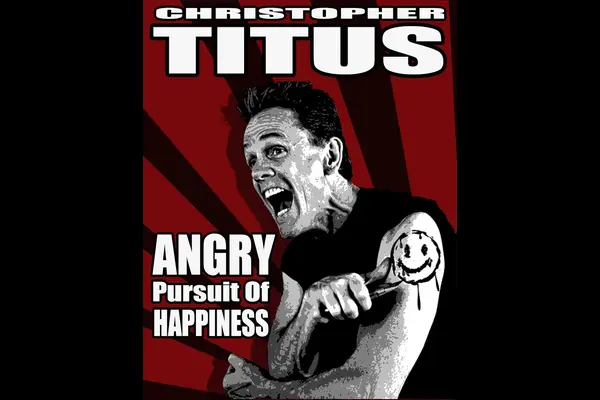
- The Angry Pursuit of Happiness (2015)
More from Christopher Titus
-
Born with a Defect
YouTube
-
The Angry Pursuit of Happiness
Comedy Central
If you liked this
-
Sarah Silverman PostMortem
Netflix
-
Chelsea Handler Evolution
HBO Max
-
Lashonda Lester Shondee Superstar
Stand Up! Records
-
Derek Sheen Disasterbation
Stand Up! Records · Album
-
Julia Sweeney God Said Ha!
Warner Bros. Records