If I
BBC · 2004 · 50 min
A quiet solo show built on charts, instruments, and useless talents.
Riding a unicycle, playing the glockenspiel, and reciting a 224-word palindrome is a strange way to build a comedy set, but it proved to be a career-defining formula. This is the breakthrough solo hour that won the Perrier Comedy Award at the 2003 Edinburgh Festival Fringe and was adapted into a BBC television special in 2004.
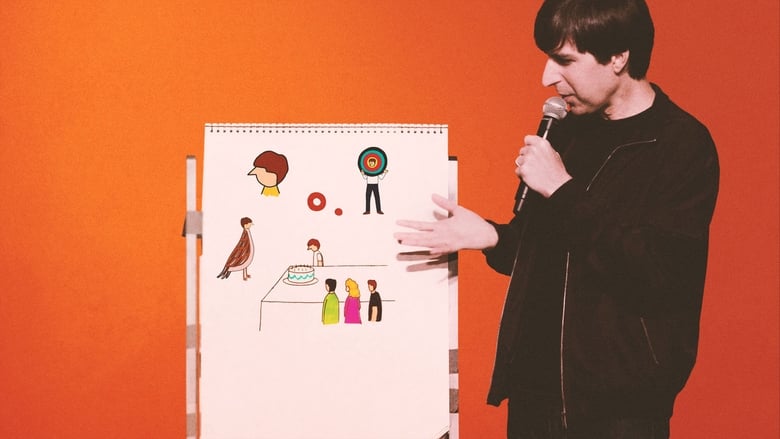
The show frames the performance around Socrates’ assertion that an unexamined life is not worth living, which Martin uses to audit his own brain on stage. Rather than relying on standard club material, he focuses on his obsession with tracking his life through a weekly point system, judging himself on categories like mind, body, and contribution while demonstrating the useless talents he mastered after dropping out of law school.
It is a quiet, meticulously organized piece of work that leans into deadpan oddity. For audiences accustomed to high-energy sets, the low-key, analytical structure functions more like an eccentric autobiographical lecture than traditional stand-up, but the sheer specificity of his thoughts keeps the room anchored.
The set list
-
A massive 222-word (or 250-word) poem that reads the exact same backwards as forwards.
Explains how the palindromic poem centers directly on the two words 'if I', which gives the special its title.
-
Photographic palindromes illustrating odd concepts.
Presents visual puns such as a photo of a bicycle wearing a sombrero captioned 'El cycle'.
-
The oddity of swimming as an activity.
Observes that swimming is an activity humans engage in 'for fun, or to not die.'
-
The experience of drowning.
Surreally questions whether drowning would initially be less unpleasant if the person were thirsty.
-
Coping with the boredom of law school.
Recounts enlivening his law school classes and speeches by intentionally slipping pre-selected, inappropriate words into them.
How it plays
- Tone
- Charming, philosophical, whimsical, deadpan, and introspective.
- On stage
- Boyish, clean-cut, geeky, and deadpan with an overthinking, dweebish existential sensibility and charming vulnerability.
- Pace
- Calm, structured, and continuous; feels part stand-up comedy, part autobiographical lecture and philosophical inquiry.
- About
- the definitions and possibilities of the word 'if', existential dread and self-examination, puzzles, anagrams, and palindromes, leaving law school and career indecision, acquiring useless talents as a coping mechanism
What the critics said
Widely acclaimed by major critics as an exceptionally audacious, charming, and inventive debut hour that merged wordplay, philosophy, and narrative; though at least one reviewer found the academic, over-analytical wit tedious and likened it to 'watching Lisa Simpson doing stand-up.'
In the room: Created high demand with audiences rushing for tickets in Edinburgh, though reviewers noted occasional tepid moments in early full houses.
Backstory
Devised as a one-man show experiment in New York to combine narrative structure with comedy beyond simple jokes, exploring his personal compulsions, intellectual obsessions, and life path through the definitions of the word 'if.'
Details
- Released
- Taped
- Riverside Studios, London
- Runtime
- 50 min
- Where
- BBC
- Director
- David G. Croft
- Honors
- Winner, Perrier Comedy Award (2003 Edinburgh Festival Fringe)Winner, Best One-Person Show (Aspen Comedy Arts Festival)
- Topics
- After
- Comedy Central Presents (2004)
More from Demetri Martin
-
Demetri Deconstructed
Netflix
-
The Overthinker
Netflix
-
Live (At the Time)
Netflix
-
Standup Comedian
Comedy Central
-
Person
Comedy Central
-
Comedy Central Presents
Comedy Central

If you liked this
-
Jeremy Arroyo Groaners
Comedy Dynamics · Album
-
Emo Philips Comedian and Mammal
Consolidated Productions
-
Lisa Best Brain Bank
Comedy Dynamics · Album
-
Stewart Francis Pun Gent
Spirit Entertainment
-
Todd Barry Comedy Central Presents
Comedy Central
-
Aaron Chen Funny Garden
Netflix